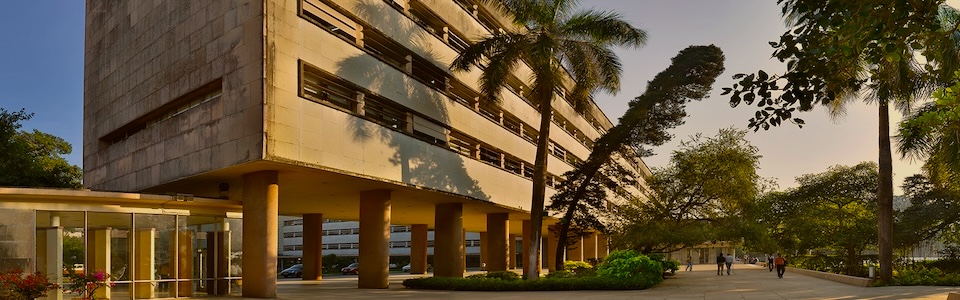

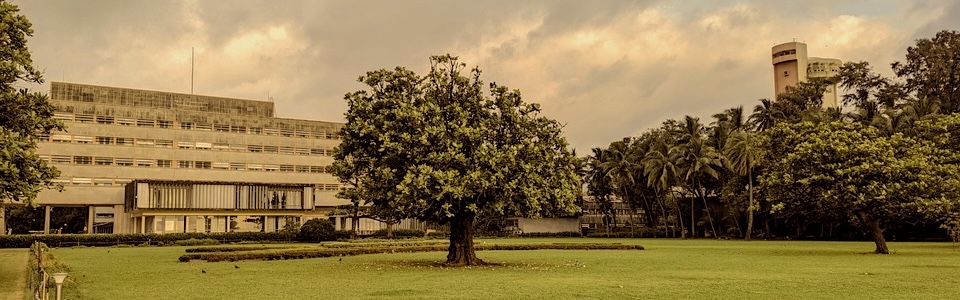
The Department of Theoretical Physics at the Tata Institute of Fundamental Research has played a central role in shaping the contours of fundamental physics research in India. Over the decades, it has been home to several generations of physicists whose contributions have left a lasting imprint on areas ranging from high energy physics to condensed matter theory. The Department continues to uphold a tradition of intellectual depth and academic freedom, serving as a place where foundational questions in physics are pursued with both independence and rigor.
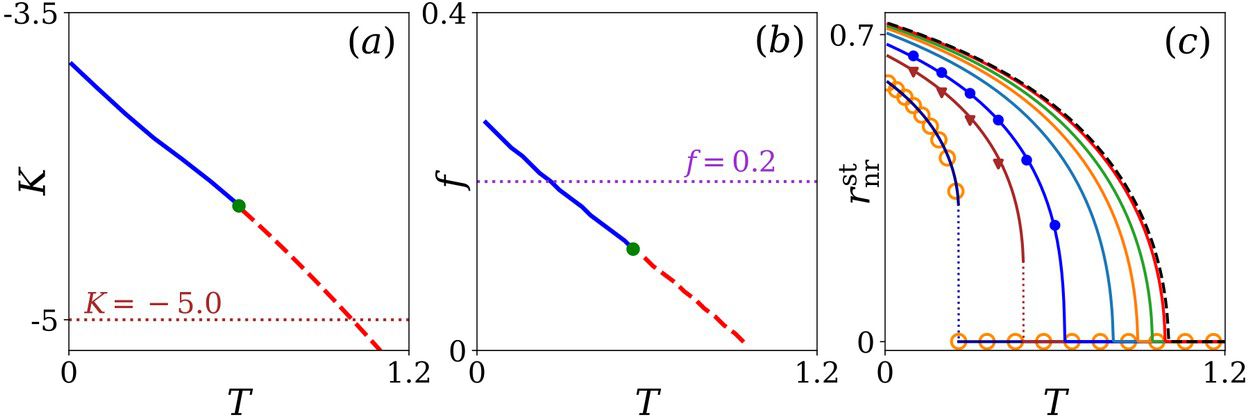
Researchers in DTP have discovered that instead of manipulating every component or modifying interactions in a many-body system, occasionally resetting just a small fraction can reshape how the entire system behaves macroscopically, including how it transitions from one phase to another. This counterintuitive approach, called subsystem resetting, offers a powerful, universal control strategy to tune collective behavior in complex systems ranging from magnets to neural networks.
Read more →
Along with colleagues from high energy physics and nuclear physics, members of DTP initiate the project title "Indian Mission in Positronium Experimental Thrust for Ultra-precision Searches" or IMPETUS, with the vision to build an End2End Indian experiment.
Read more →In everyday life, a gentle nudge at the right moment can prevent a system from spiraling - resetting a frozen computer, rebooting a router, or tapping a malfunctioning machine. The researchers show that a similar idea works in physics, but with a deeper consequence. "The most surprising insight is that you can reshape the entire phase behavior of a many-body system without ever touching the interactions or the majority of its degrees of freedom," says Prof. Shamik Gupta. "In statistical physics, the orthodoxy is that to change a phase transition, you must change couplings, external fields, geometry, or temperature. Yet this study shows that you can move, split, eliminate, or recreate phase transitions exactly as you like, simply by occasionally resetting a small fraction of the system to a chosen state."
At the heart of the mechanism is non-equilibrium dynamics. "Resetting breaks detailed balance, thereby inducing a nonequilibrium structure. It biases macroscopic order indirectly through the reset subsystem, exploits long-range interactions to propagate that bias, and turns memory effects into a stabilizing force," Gupta adds. "Control emerges from an intricate interplay of noise, memory, and incomplete intervention."
This work by Anish Acharya, Rupak Majumder, and Prof. Shamik Gupta has been published in Physical Review Letters.
The IMPETUS initiative is a phased national program aimed at establishing an end-to-end Indian precision experiment based on the positronium system. The initiative aligns with listed goals both in the DAE Vision-2047 the Mega Science Vision (MSV) documents in nuclear and particle physics. It seeks to build a coordinated and interdisciplinary national effort that integrates expertise across high-energy physics, nuclear physics, optics, materials science, detector development, and data science to perform world-leading precision studies of positronium decays and rare processes.
The program will enable best-in-class searches for physics beyond the Standard Model (BSM), including milli-charged particles, axion-like particles, Z′ resonances, and electromagnetic moments of the dark matter, while also advancing fundamental tests of discrete symmetries and quantum correlations. In parallel, this initiative will leverage the same detector platform for interdisciplinary applications such as quantum entanglement studies, precision nuclear form-factor measurements, quantum sensing, and the development of advanced medical imaging technologies.
DTP members finds a new way to derive the effective infrared of a strongly coupled QCD.
Full article →New class of CMB spectral distortions were predicted that arise from absorption of the CMB photons by multi-state dark matter. Such signatures are a natural prediction of a class of composite dark matter models characterized by electrically neutral states but with nonzero higher order electromagnetic moments. The nature of spectral distortions depends sensitively on the dark matter transition frequency and the strength of couplings of dark matter with visible sector particles as well as its self-interactions, thus opening a new window to probe the nature of dark matter. The non-thermal distortions thus created were computed and shown to have unique spectral shapes making them distinguishable from the standard thermal distortions and potentially detectable in the next-generation experiments such as Primordial Inflation Explorer (PIXIE). The spectral distortion limits from the cosmic background explorer/far-infrared absolute spectrophotometer (COBE/FIRAS) were computed and were found to already give a constraint on the electromagnetic coupling of dark matter, which is 3 orders of magnitude stronger compared to the current direct detection limits for the mass dark matter of the order of few times the electron mass and transition energy in the optical range.
Full article →
The Department of Theoretical Physics has a long and distinguished tradition of excellence in fundamental research. Since its inception (please see the history page), the department has played a central role in shaping theoretical physics in India, while contributing significantly to many areas in the global scientific community. Our faculty, students, postdoctoral researchers, and visitors engage in deep and sustained inquiry into the fundamental laws governing nature.
Research at DTP spans a broad range of areas, including Condensed Matter and Statistical Physics, Cosmology & Astroparticle Physics, High Energy Physics, and String Theory.
A defining feature of the department is the close interaction between different subfields, which fosters cross-fertilization of ideas and encourages innovative approaches to fundamental physics. We place strong emphasis on rigorous analytical work, advanced numerical and computational techniques, and the development of new theoretical frameworks motivated by experiment and observation.
The department is also deeply committed to training the next generation of theoretical physicists. Our graduate and postdoctoral programs emphasize intellectual independence, technical depth, and creative thinking. Students and postdocs benefit from close mentoring, regular seminars and colloquia, and opportunities for national and international collaboration. Our faculties are also involved in many national activities. Many of our alumni now hold leading academic and research positions worldwide, reflecting the strength of our training and research environment.
DTP maintains strong links with experimental programs at TIFR and with national and international research initiatives. In recent years, the department would also like to expand its engagement with emerging areas such as quantum computing, AI-ML applications, and the physics of life, recognizing their growing importance for fundamental physics.
As Chair of the Department, my goal is to nurture an open, inclusive, and intellectually vibrant environment that supports excellence in research and education. We aim to build on our rich legacy while actively embracing new directions and challenges in theoretical physics. I invite prospective students, researchers, and collaborators to explore our work and engage with us as we continue to advance our understanding of the fundamental structure of the universe.
We also regularly organize public lectures, providing opportunities for visitors to interact with the speakers and engage in informal discussions with department members about our research activities (please see the DTP endowment page).
The Department of Theoretical Physics has a long and distinguished tradition of excellence in fundamental research. Since its inception (please see the history page), the department has played a central role in shaping theoretical physics in India, while contributing significantly to many areas in the global scientific community. Our faculty, students, postdoctoral researchers, and visitors engage in deep and sustained inquiry into the fundamental laws governing nature.
Research at DTP spans a broad range of areas, including Condensed Matter and Statistical Physics, Cosmology & Astroparticle Physics, High Energy Physics, and String Theory. A defining feature of the department is the close interaction between different subfields, which fosters cross-fertilization of ideas and encourages innovative approaches to fundamental physics. We place strong emphasis on rigorous analytical work, advanced numerical and computational techniques, and the development of new theoretical frameworks motivated by experiment and observation.
The department is also deeply committed to training the next generation of theoretical physicists. Our graduate and postdoctoral programs emphasize intellectual independence, technical depth, and creative thinking. Students and postdocs benefit from close mentoring, regular seminars and colloquia, and opportunities for national and international collaboration. Our faculties are also involved in many national activities. Many of our alumni now hold leading academic and research positions worldwide, reflecting the strength of our training and research environment.
DTP maintains strong links with experimental programs at TIFR and with national and international research initiatives. In recent years, the department would also like to expand its engagement with emerging areas such as quantum computing, AI-ML applications, and the physics of life, recognizing their growing importance for fundamental physics.
As Chair of the Department, my goal is to nurture an open, inclusive, and intellectually vibrant environment that supports excellence in research and education. We aim to build on our rich legacy while actively embracing new directions and challenges in theoretical physics. I invite prospective students, researchers, and collaborators to explore our work and engage with us as we continue to advance our understanding of the fundamental structure of the universe.
We also regularly organize public lectures, providing opportunities for visitors to interact with the speakers and engage in informal discussions with department members about our research activities (please see our endowment page).