Cosmology and Astroparticle Physics
The Cosmology and Astroparticle Physics (CAP) Group at the Department of Theoretical Physics at TIFR Mumbai, investigates fundamental questions spanning particle physics, cosmology, and astrophysics. Our research centers on understanding the nature of dark matter and dark energy, exploring the role of neutrinos in stars and over cosmological scales, understanding cosmic dawn and the epoch of reionization, and leveraging the cosmic microwave background as a window into the early universe.
Our approach combines theoretical development with direct engagement with observational data, contributing to the global effort in precision cosmology. We employ analytical methods, numerical simulations, and phenomenological modeling to bridge high-energy physics with cosmic-scale phenomena.
Members

Shadab Alam
Basudeb Dasgupta

Rishi Khatri

Girish Kulkarni
Subhabrata Majumdar
Areas of Interests
Cosmic Microwave Background
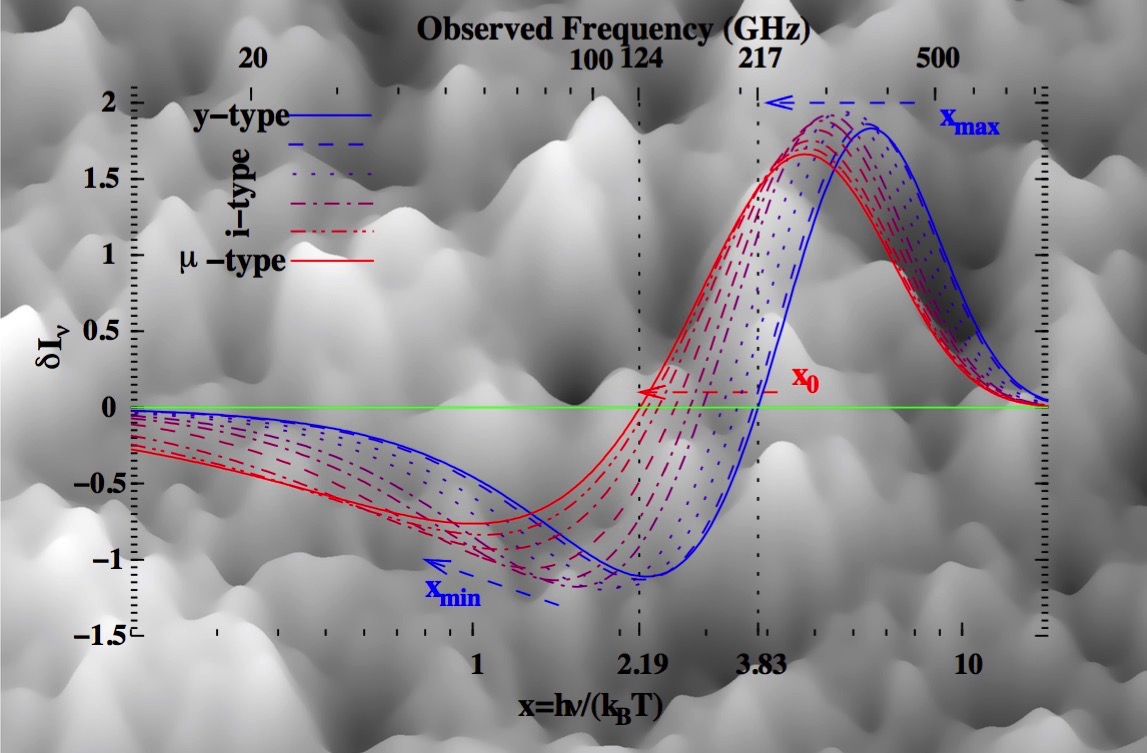
The cosmic microwave background is the single richest source of cosmological information today. The "precision" in precision cosmology comes mostly from the cosmic microwave background data gathered by the space based (COBE, WMAP, Planck), ground based (SPT, ACT, BICEP/KECK, PolarBEAR and many more), and balloon based (Boomerang, SPIDER to name a few) experiments. We work on both the theoretical and observational aspects of the cosmic microwave background. On the theoretical side our work focuses on understanding the interaction between the matter and radiation throughout the history of the Universe, how this interaction imprints information in the cosmic microwave background anisotropies and in the deviations of the cosmic microwave background from a blackbody spectrum (the so called spectral distortions).
It is of course not enough to calculate theoretically the information hidden in the cosmic microwave background. The CMB experiments usually measure the total sky emission in a few rather broad frequency bands. The sky emission in each frequency band consists of the sum of emission from our own Galaxy as well as other galaxies, the so called foregrounds, in addition to the cosmic microwave background signal we are interested in. We develop new techniques to separate out the cosmological information from the foregrounds.
Cosmic Origins and the First Billion Years
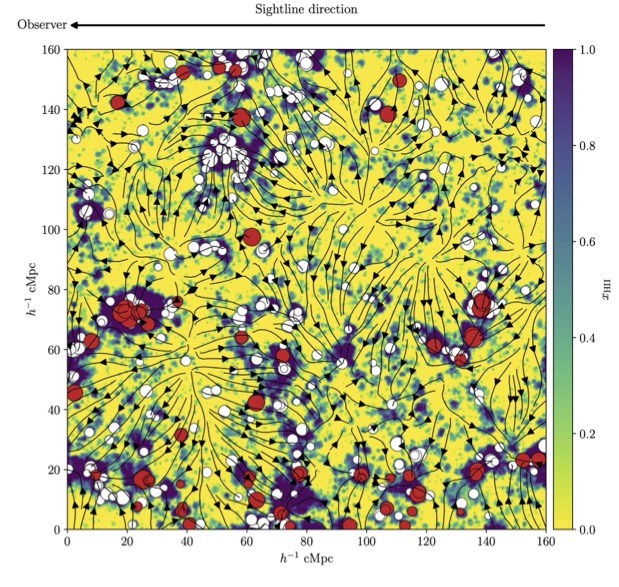
We investigate the origin and evolution of the Universe during its first billion years, which is a period when the first stars, galaxies, and black holes transformed the cosmos. We explore fundamental questions about cosmic reionization, the nature of dark matter, and the formation of early structure. Our research combines theoretical modelling, high-performance cosmological simulations, and cutting-edge machine learning techniques, all closely coupled with data from leading international observatories.
We maintain strong synergy with India’s strategic role in flagship global projects. Our work is deeply integrated with the Square Kilometre Array (SKA), where India is a founding member, and the Thirty Metre Telescope (TMT), which will enable transformative optical and near-infrared observations. We also participate actively in the Rubin Observatory’s Legacy Survey of Space and Time (LSST) through the Dark Energy Science Collaboration (DESC), helping shape science and data analysis goals. Our group is a member of the REACH and XQR-30 collaborations, and contributes to multiple JWST programmes that are redefining our view of the early Universe.
Dark Energy
One of the most profound mysteries in modern cosmology is the accelerated expansion of the universe, driven by an enigmatic component called dark energy. Discovered in 1999 through supernova observations, this phenomenon overturned the long-held expectation that cosmic expansion should decelerate due to gravitational attraction. Dark energy now comprises approximately 70% of the universe's total energy content, yet its fundamental nature remains unknown.
Our group plays an active role in advancing dark energy research through theoretical modeling, numerical simulations, and the development of novel analysis methods. We are key contributors to major observational programs including the Dark Energy Spectroscopic Instrument (DESI) and the Legacy Survey of Space and Time (LSST). Our theoretical work focuses on understanding the equation of state parameter (w), which relates dark energy's pressure to its energy density, and exploring scenarios beyond the simple cosmological constant model where w = -1.
As part of the DESI collaboration, our group contributed to the recent analysis that revealed potential evidence for evolving dark energy. Using advanced theoretical frameworks and simulation techniques, we help interpret DESI's three-dimensional maps of cosmic structure derived from millions of galaxy spectra. Our work combines rigorous theoretical modeling with cutting-edge data analysis to probe whether dark energy's properties change over cosmic time—a discovery that would fundamentally reshape our understanding of the universe's expansion history and require new theoretical paradigms involving multiple scalar fields.
Dark Matter
Dark matter, which makes up about 26% of the energy density of the Universe today, is one of the frontier problems in physics. The evidence gathered so far points to the existence of a new form of matter – which could be a new particle (or perhaps more than one) from beyond the standard model of particle physics, or primordial black holes, or something new altogether. This lays down a challenge – to discover the identity of dark matter using one of the wide variety of dark matter searches being undertaken around the world.
The interpretation of the results of most of these experiments requires an accurate model of the dark matter density in the solar neighbourhood through which we are now passing. Modeling of the dark matter profile in our Galaxy is one of the aspects that we focus on. We also study how the exact properties of dark matter, such as its mass and its interaction with each other and with ordinary (baryons) matter affects the formation of galaxies and clusters of galaxies.
Our other interest in dark matter is through the lens of astroparticle physics. We work on different aspects of dark matter physics, be it possible mechanisms for its production, various ways to identify its nature, etc. We consider specific proposals for dark matter – be it a weakly interacting massive particle, a self-interacting one, or even exotic black holes that formed immediately after the Big Bang – and ask how to test these ideas?
Inflation
Inflation is considered by most cosmologists to be the best explanation for the origin of our Universe, in particular the small primordial fluctuations which gave rise to the galaxies, stars and us. There is now a plethora of models of inflation making the field quite confusing. We focus on understanding inflation from general principles without confining it to specific models.
Large Scale Structure
The Universe exhibits intricate patterns on scales far beyond individual solar systems, galaxies, or even the largest galaxy clusters. This cosmic architecture, known as large-scale structure, can be traced through three-dimensional maps of galaxy distributions, hydrogen gas, and dark matter halos.
Our group actively studies these large-scale structures through galaxy surveys, developing innovative methods to extract detailed cosmological information while refining existing techniques to push beyond current observational frontiers.
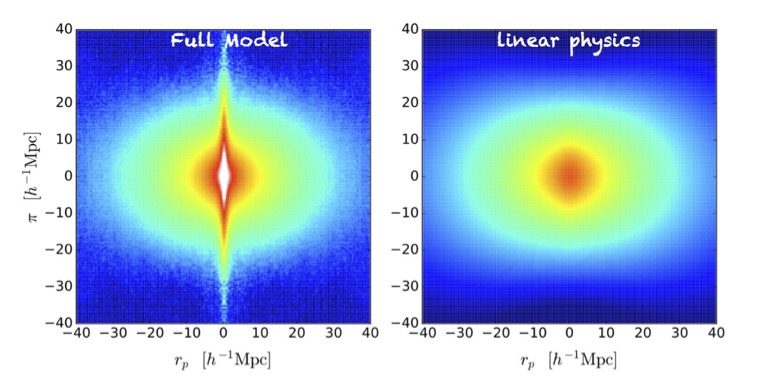
These cosmic maps enable us to probe fundamental physics through several key observables. We study the Baryon Acoustic Oscillation scale, which preserves the imprint of sound waves that traveled through the early universe before it became transparent. We analyze redshift space distortions to understand galaxy motions on large scales, and examine the "fingers of God" effect to study virial motions within dark matter halos. Additionally, we investigate gravitational redshift effects to understand how gravity influences light as it travels from dense regions of curved spacetime to less dense areas.
Our group actively participates in major large-scale structure surveys including DESI, 4MOST, LSST, and SKA. We contribute to these collaborations by developing advanced analysis methodologies and extracting new physical insights from survey data.
Neutrino Astrophysics
Neutrinos have unique properties that make them a useful tool to study astrophysics, cosmology, and particle physics. They are important for the evolution of stars and galaxies, and come to us from the depths of these faraway and dense parts of the Universe, bearing useful information. Studying these particles have already resulted in major discoveries, including a number of Nobel prizes!
Our group has played a pioneering role in developing a better understanding of neutrinos inside supernovae, especially “collective oscillations” – the interdependent transmutations of 10^57 neutrinos, which has similarities to the collective motions of schools of fish or flocks of starlings! This is a challenging problem with important repercussions for supernova explosion dynamics and synthesis of nuclei.
A non-zero neutrino mass also has important consequences for the formation of the large scale structure. We study the role neutrinos play in the formation of the largest structures in the Universe, including possible signatures of new physics.
Particle Physics from Gravitational Waves
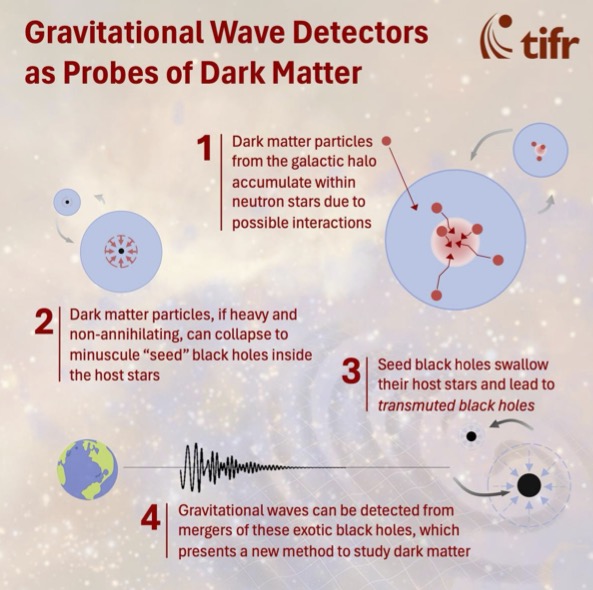
A new direction in our group is using gravitational waves to probe the fundamental physics of dark matter. We've shown how dark matter can accumulate in stars and transmute them into black holes, leaving sharp signatures in gravitational wave data. Now, we’re pushing further: using black hole binaries to detect dark matter spikes in galaxies and to test self-interacting dark matter models. As gravitational wave astronomy enters a data-rich era, thanks to already running observatories such as LIGO-Virgo-Kagra as well as several upcoming facilities, we're turning these cosmic collisions into precision experiments for particle physics, opening a new frontier in the search for the dark universe.
Sunyaev-Zeldovich Effect
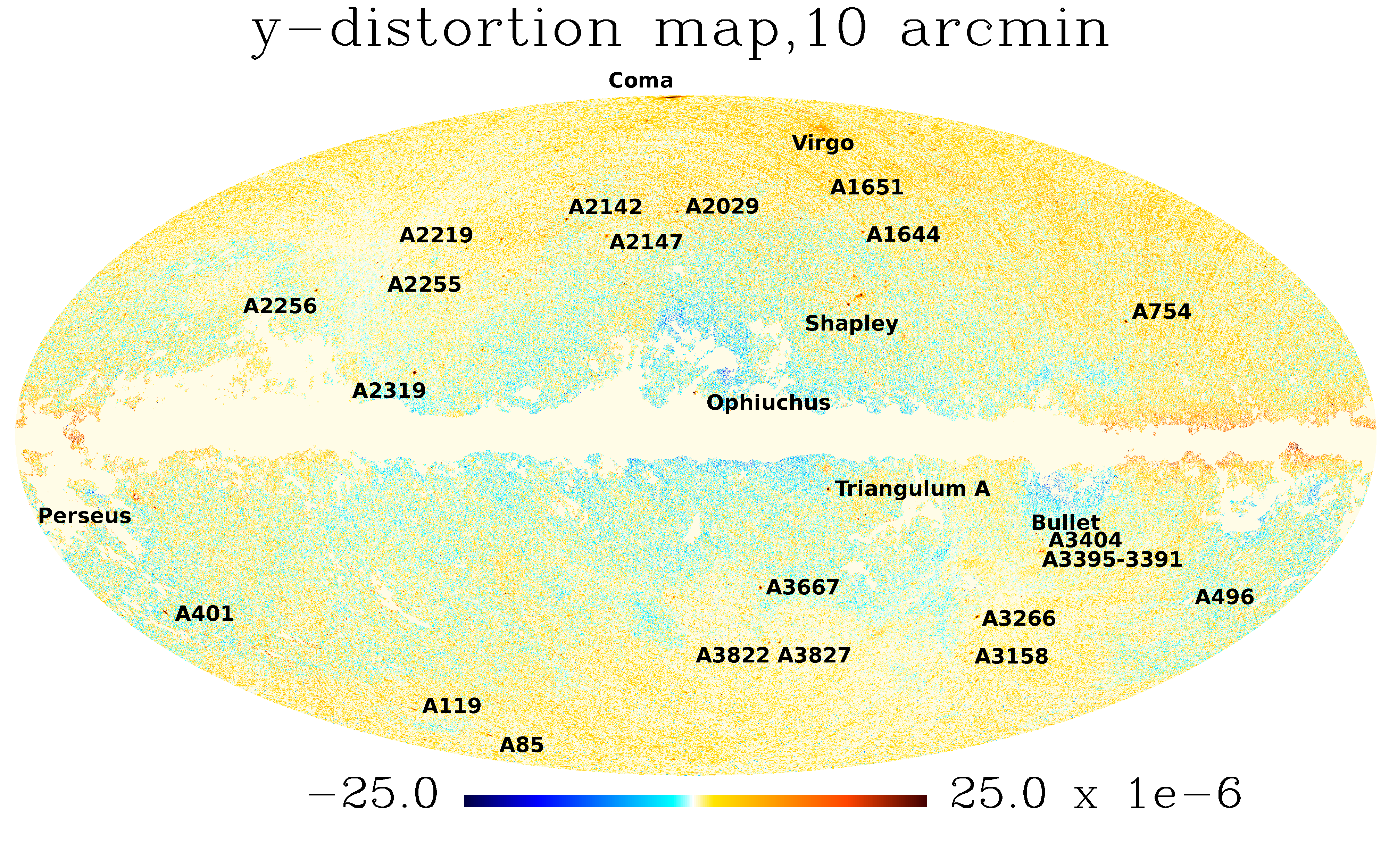
The Sunyaev-Zeldovich (SZ) effect, the name given to the up-scattering of the CMB photons by hot electrons in the clusters of galaxies, is an example of the CMB spectral distortion which has already been observed! In fact discovery of new clusters of galaxies by the CMB experiments (in particular Planck, SPT and ACT) has become almost routine. The SZ effect can be calibrated and used as a proxy to the cluster mass and therefore contains cosmological information. We use the SZ effect survey data to constrain cosmology as well as the internal dynamics and physics of the galaxy clusters.