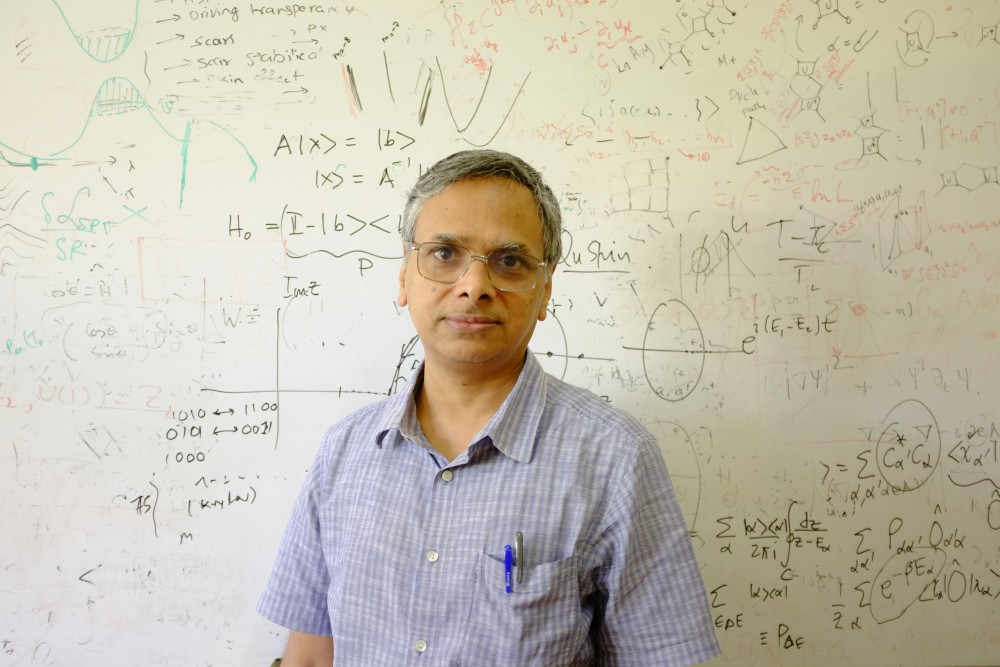
Condensed Matter and Statistical Physics
The Condensed Matter and Statistical Physics group in the Department of Theoretical Physics at TIFR Mumbai explores how rich, emergent behavior arises in complex many-body systems. On the condensed matter side, the group focuses on fundamental questions in quantum many-body physics, with particular strength in strongly correlated systems such as frustrated magnets, superconductors, and two-dimensional materials. A central theme is the interplay of symmetry and topology in shaping the phases and dynamics of interacting systems, spanning both quantum materials and ultracold atomic platforms, alongside the development of advanced numerical methods for quantum systems.
The statistical physics effort complements this by investigating how collective phenomena emerge from simple microscopic rules in large systems. Current research addresses foundational challenges in non-equilibrium physics, including the principles governing equilibration, the statistics of nonlinear dynamics, and the behavior of driven and disordered systems. Active areas include collective effects in active matter, extreme events in correlated systems, computational approaches to complex many-body problems, and field-theoretic descriptions of non-equilibrium critical phenomena.
An important and growing interface between these directions is the study of non-equilibrium quantum dynamics. This includes both traditional probes, such as correlation functions, and newer quantum information perspectives involving entanglement and information spreading. These efforts address fundamental questions about thermalization and the foundations of statistical mechanics, while also informing the broader study of quantum coherence and control in many-body systems.
Members
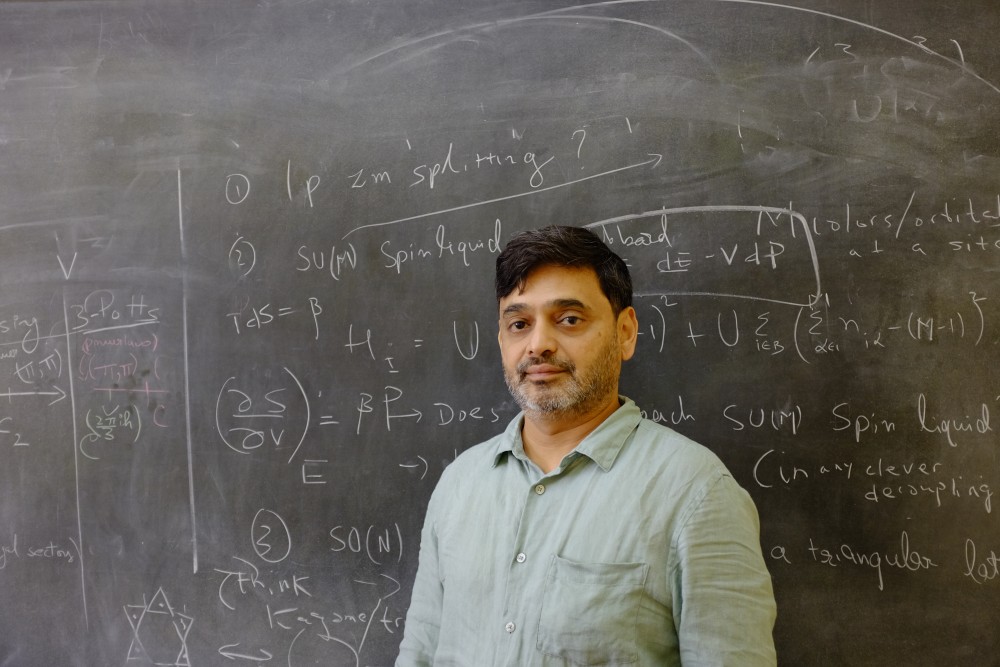
Kedar S. Damle
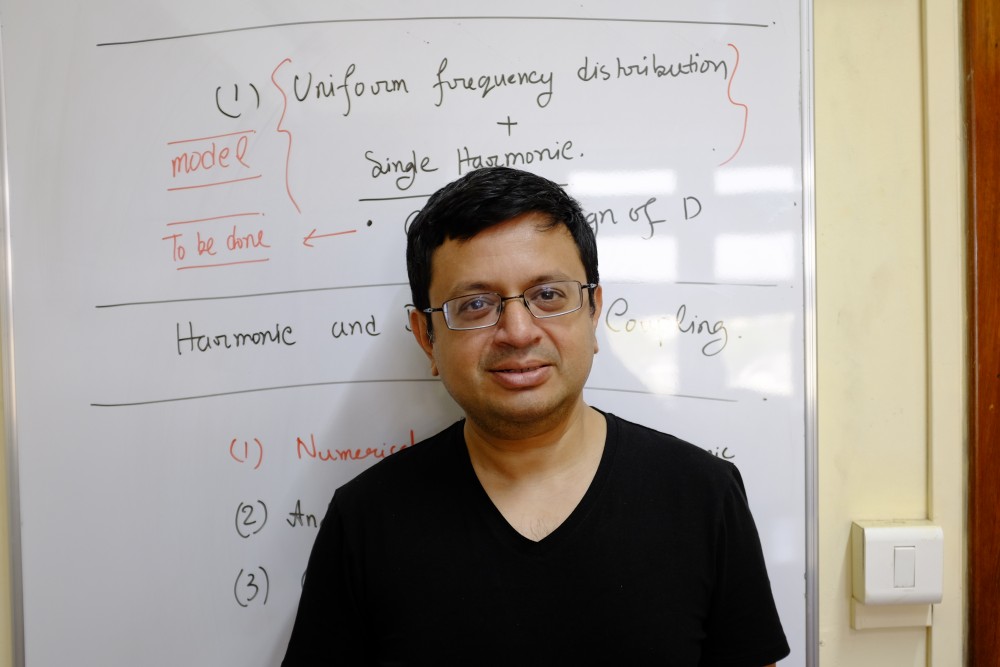
Shamik Gupta
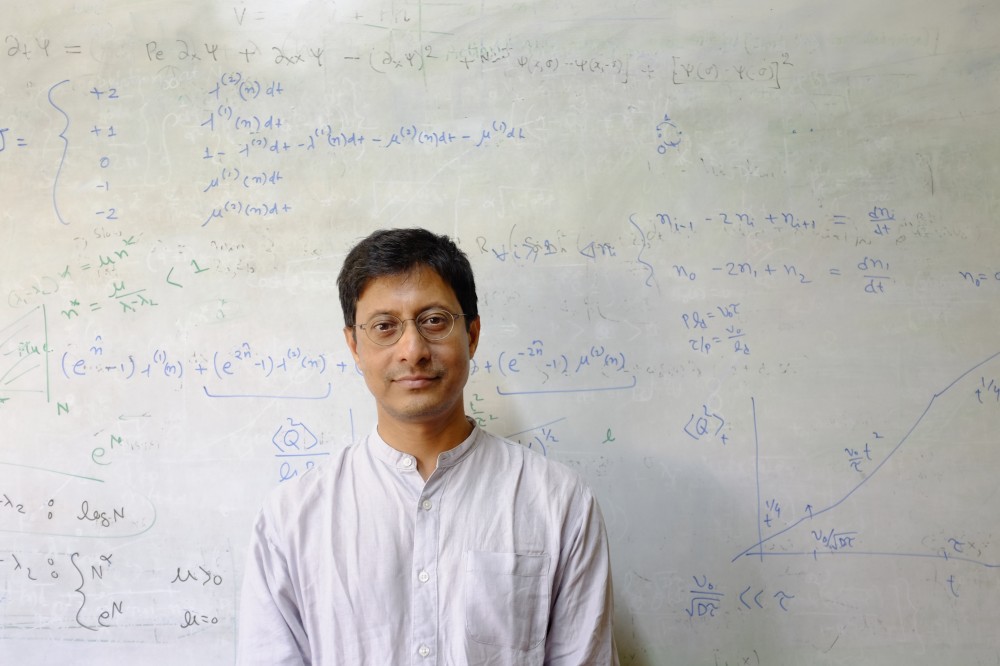
Tridib Sadhu

Rajdeep Sensarma